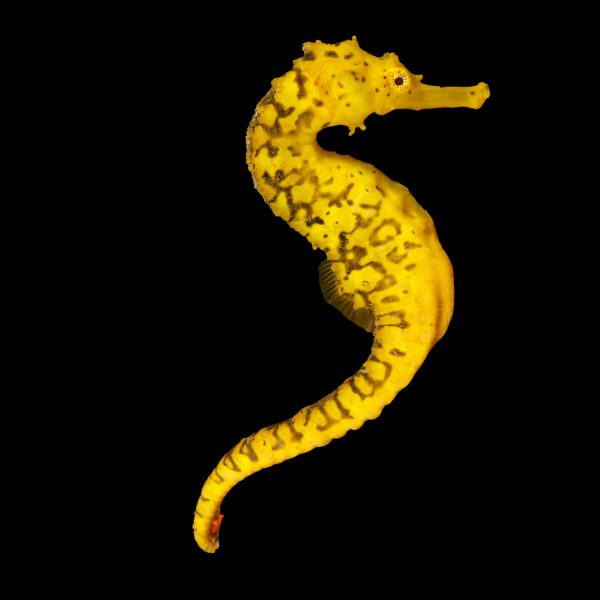
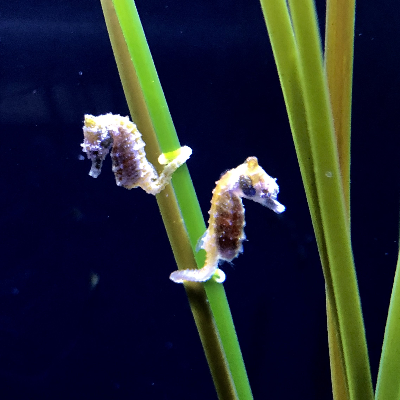
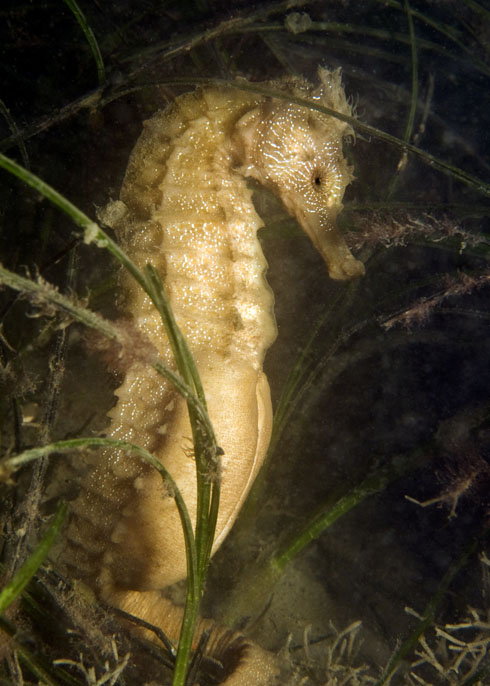
Meet the genus Hippocampus
Seahorses in the aquarium trade
They share the same unmistakable silhouette, but not the same care. Size, temperature, food, fry type and even the amount of cooling required can differ dramatically by species.
Captive-bred firstChoose a clearly identified animal already eating frozen mysis—except dwarfs, which require live baby brine.
Color is not an IDMany species change from yellow to brown or black. Body shape, spines, snout and provenance are more useful.
Do not mix casuallyDifferent species can carry different pathogens and may need incompatible temperatures or food sizes.
01Hippocampus erectus
Lined seahorse
Adult size5–8 inchesTemperature70–74°FStarting tank30+ gallons / pairExperienceBest first large species
What makes it different
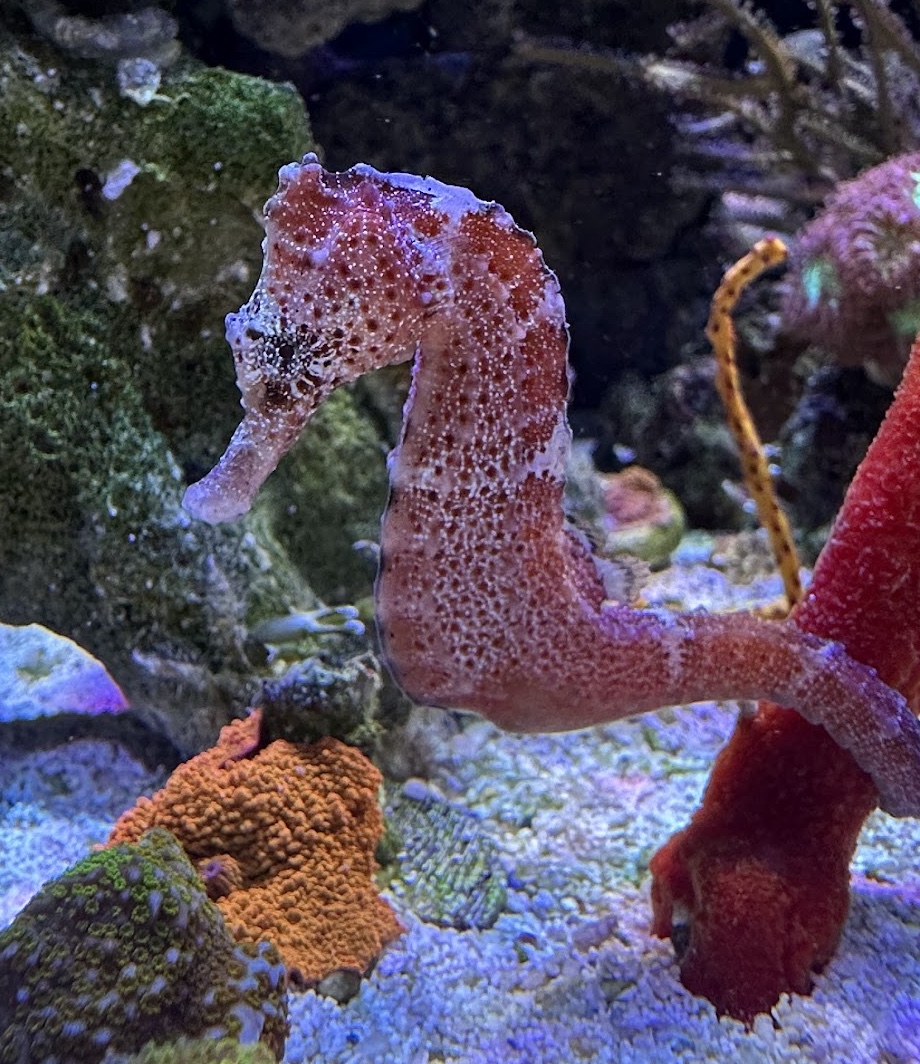
Stocky, sturdy and highly variable in color, often with pale lines or saddle markings. Captive-bred erectus are widely regarded as the most forgiving full-size seahorse.
Core requirements
A tall, mature tank with gentle-to-moderate flow, many hitching posts and twice-daily enriched frozen mysis. Excellent choice for a first dedicated seahorse aquarium.
02Hippocampus reidi
Longsnout seahorse
Adult size5–7 inchesTemperature70–74°FStarting tank30+ gallons / pairExperienceIntermediate
What makes it different
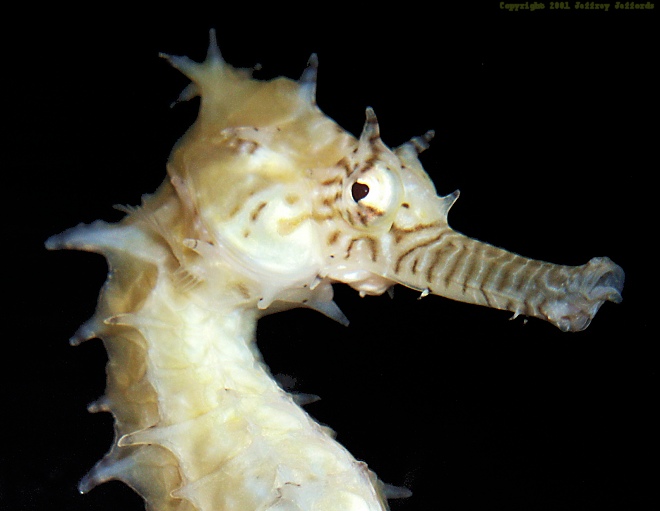
A slender Western Atlantic species with a noticeably long snout and small dark spots. Adults may be yellow, orange, brown or black; color alone does not identify the species.
Core requirements
Keep captive-bred adults on enriched frozen mysis in a tall aquarium. Reidi fry are small and pelagic, making home breeding substantially harder than erectus.
03Hippocampus kuda
Spotted or yellow seahorse
Adult size5–7 inchesTemperature70–74°FStarting tank30+ gallons / pairExperienceIntermediate
What makes it different
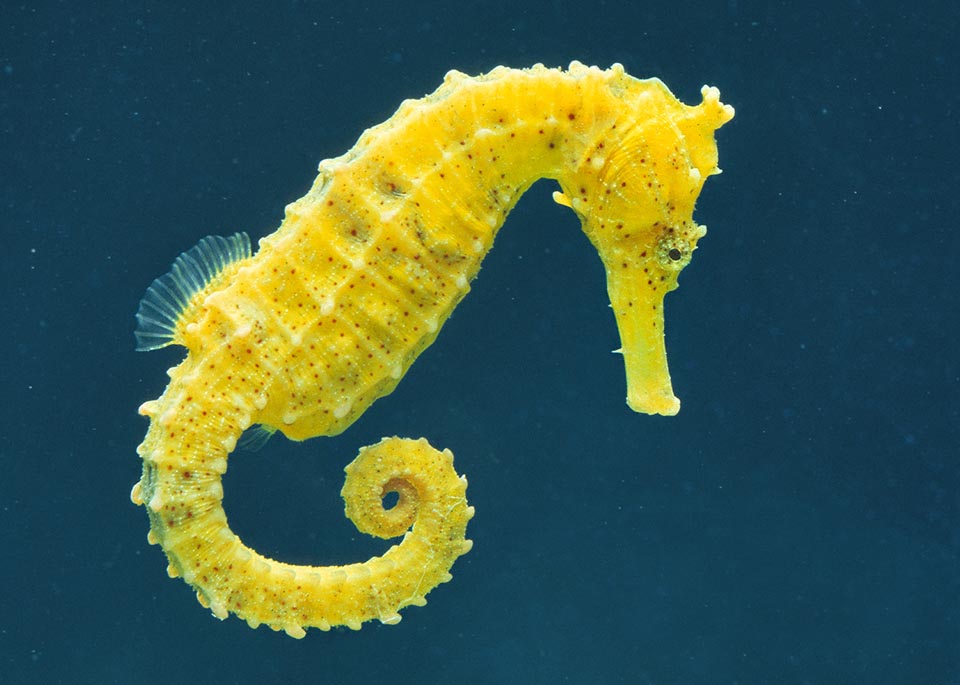
Usually smoother-bodied than erectus, with a low coronet and rounded cheek spines. Its color can range from yellow to tan or nearly black.
Core requirements
Buy confidently identified captive-bred animals already eating frozen mysis. Kuda are frequently mislabeled in commerce, so breeder history matters more than color or a store name.
04Hippocampus barbouri
Barbour’s seahorse
Adult size5–6 inchesTemperature72–74°FStarting tank30+ gallons / pairExperienceIntermediate
What makes it different
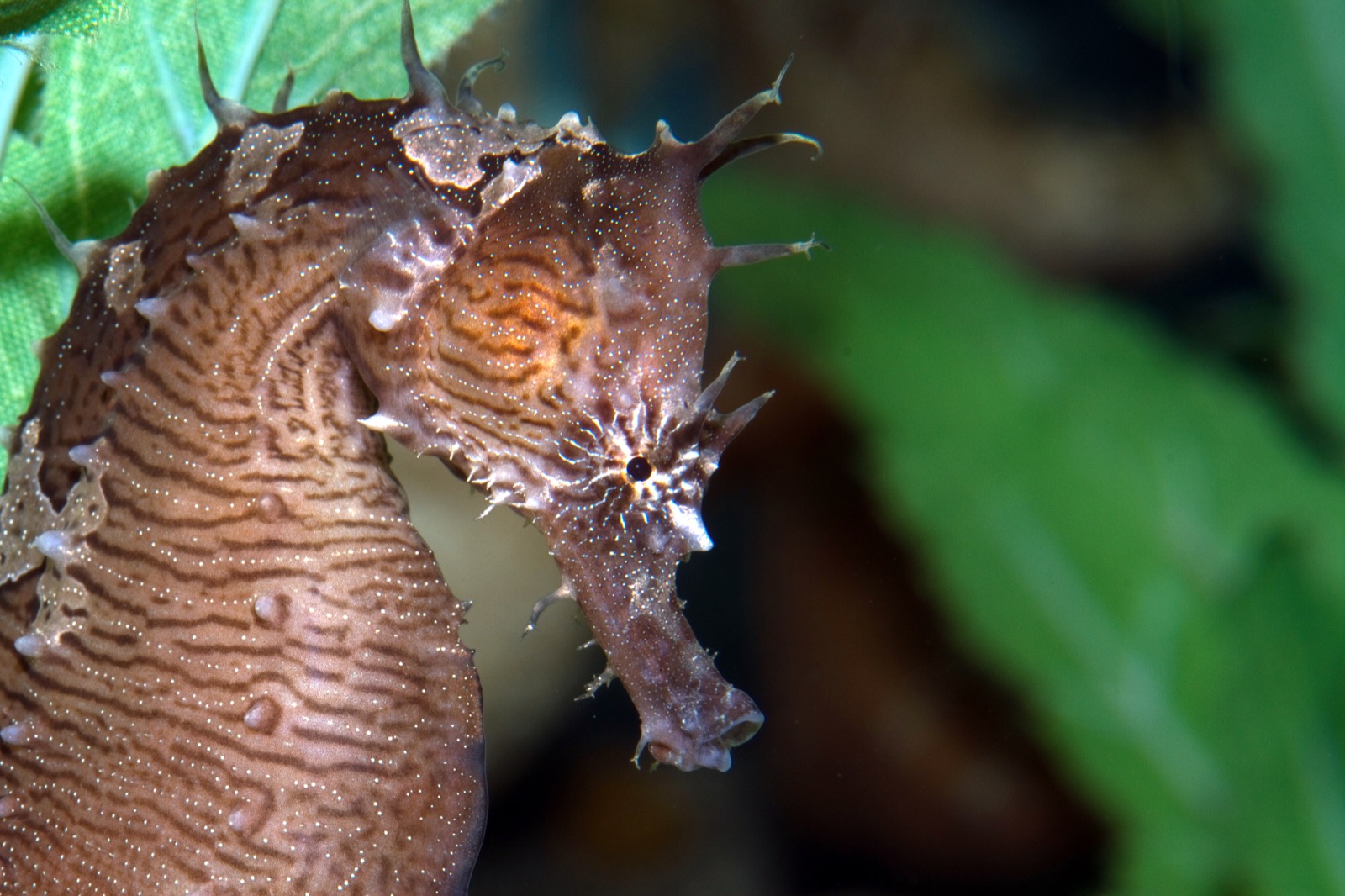
One of the easiest trade species to recognize: prominent body spines, a striped snout and a tall coronet give it a wonderfully prehistoric look.
Core requirements
Provide open height, smooth branching hitches and excellent filtration. Its spines are normal anatomy—not a sign of irritation—and should never be handled or snagged in coarse netting.
05Hippocampus comes
Tiger-tail seahorse
Adult size5–7 inchesTemperature72–74°FStarting tank30+ gallons / pairExperienceIntermediate
What makes it different
Named for the bold alternating bands that often wrap the tail. The body is commonly yellow and dark brown, although pattern and color vary.
Core requirements
Choose captive-bred specimens feeding aggressively on frozen mysis. Maintain stable tropical conditions, low-stress tank mates and abundant vertical hitching structure.
06Hippocampus zosterae
Dwarf seahorse
Adult size1–1.5 inchesTemperature70–74°FStarting tank5–10 gallonsExperienceSpecialist live-food care
What makes it different
A true miniature species from Florida, the Gulf of Mexico and nearby waters—not a juvenile large seahorse. Its tiny size changes every part of husbandry.
Core requirements
Keep only in a dedicated, hydroid-free dwarf setup. Feed newly hatched, enriched live baby brine shrimp two or three times every day; frozen mysis is far too large.
07Hippocampus ingens
Pacific seahorse
Adult size8–12 inchesTemperature68–72°FStarting tank50+ gallons / pairExperienceAdvanced
What makes it different
A very large Eastern Pacific species with a long tail and substantial adult body. Its eventual size and cooler preference separate it from common tropical offerings.
Core requirements
Plan a tall, spacious system and dependable cooling before purchase. Strong filtration is essential for the food and waste load produced by such large animals.
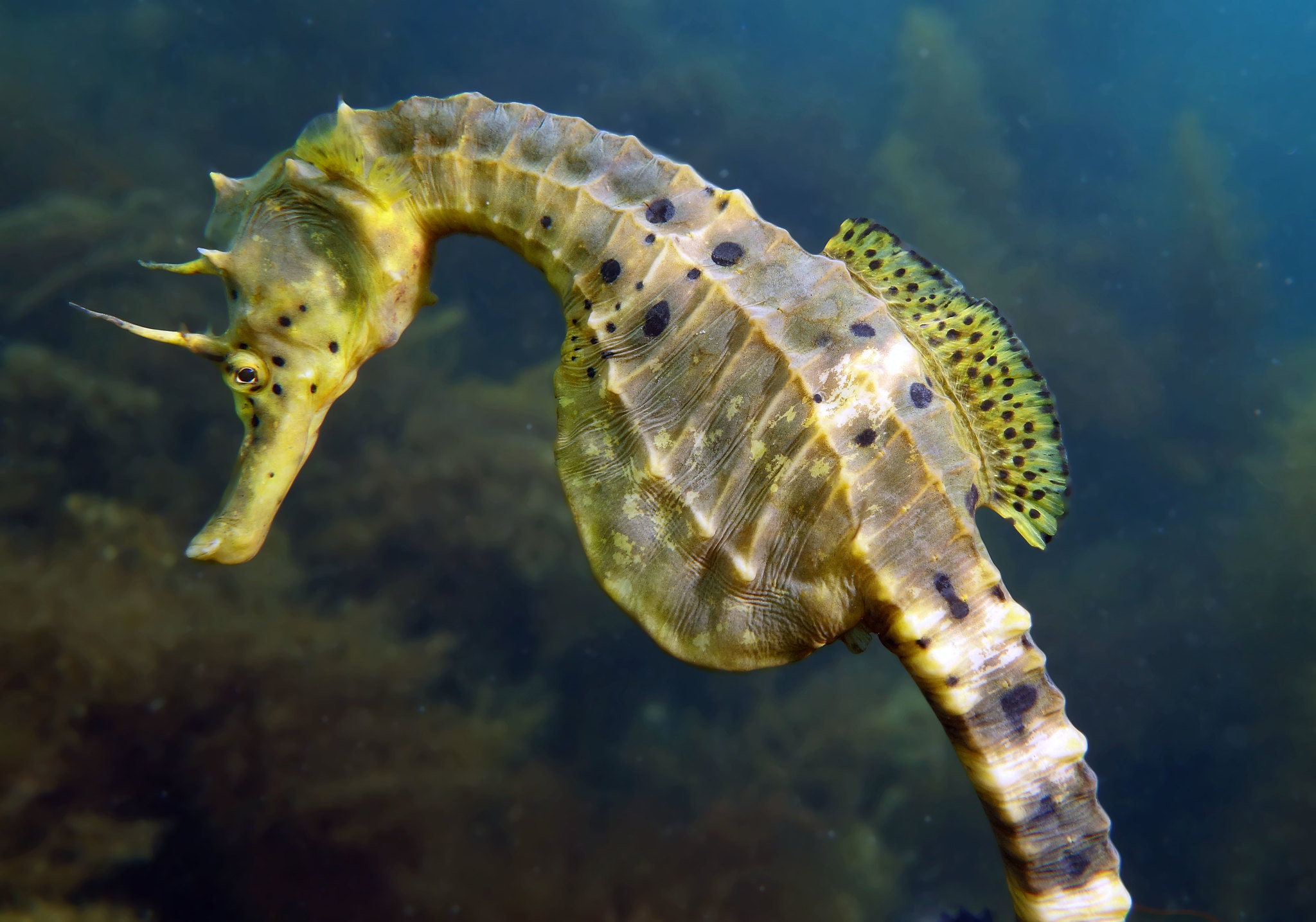
08Hippocampus abdominalis
Big-belly or pot-bellied seahorse
Adult size10–14 inchesTemperature64–68°FStarting tank65+ gallons / pairExperienceAdvanced cold-water
What makes it different
One of the world’s largest seahorses. Mature males develop the unmistakably deep brood pouch that gives the species its common name.
Core requirements
This is a temperate species, not a warm reef animal. A large, tall aquarium and a properly sized chiller are normally essential year-round.
A practical baseline: Most captive-bred large tropical seahorses do best around 70–74°F in a mature, tall aquarium with protected intakes, varied hitching posts, excellent filtration and enriched frozen mysis at least twice daily.
Sizes and aquarium volumes are conservative planning ranges, not promises about an individual. Availability changes, trade names are inconsistent, and captive-bred stock should always be preferred. Care guidance references Seahorse Savvy ↗, Seahorse.org’s identification guide ↗ and its captive-seahorse care guide ↗.